Automated CO2 Emission Reporting - A Cloud-Based Service
Starting in 2025, German companies must publish their CO2 emissions according to a uniform EU standard. We show you how this task can be completed in an automated and compliant manner.

Things are getting serious: Starting January 1, 2025, German companies must publish their CO2 emissions in accordance with a uniform, Europe-wide reporting standard. Management does not have much time left to familiarize themselves with the regulations, collect all required data, and institutionalize the reporting process. This is the mandate from the European Union and the German Federal Government, which methodically rely on the Greenhouse Gas Protocol (GHG) and ISO standards 14064 to 14067. We will show you how this task can be completed in an automated and compliant manner.
The Greenhouse Gas Protocol
The Greenhouse Gas Protocol Initiative (GHG PI) was launched in 2006 to provide companies with a framework for recording and accounting for their CO2 emissions. The goal is to monitor the CO2 emission targets defined during the Paris Climate Conference and to oversee measures such as the acquisition of additional CO2 certificates by non-compliant companies.
GHG PI defines three areas, known as "Scopes," in which CO2 emissions along the value chain must be classified, quantified, and documented:
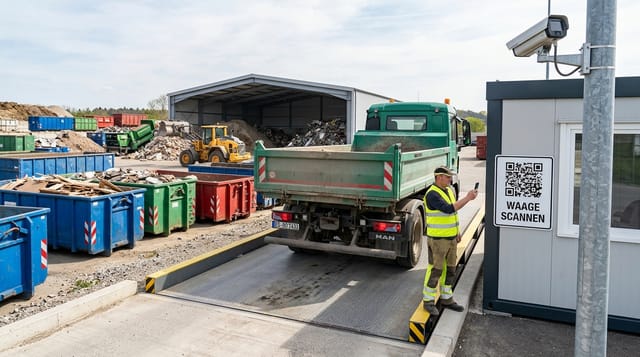
- Scope 1 covers direct CO2 emissions from a company, e.g., its own vehicle fleet, fossil fuels consumed during production, and transport carried out by the company itself.
- Scope 2 covers upstream, indirect emissions related to the provision of services or the creation of intermediate products, e.g., for production or transport, as well as emissions generated in the manufacturing process for purchased energy (electricity, steam, heat, cooling, etc.).
- Scope 3 covers downstream, indirect emissions occurring during, for example, further transport, sales, or disposal.
For the first accounting year, 2023, Scope 1 (direct emissions) is already relevant.
Who is legally required to perform CO2 accounting?
The legal basis for accounting and documenting CO2 emissions is the CSR Directive Implementation Act (CSR-RUG), which stems from the European Corporate Sustainability Reporting Directive (CSRD). The EU is currently revising this directive into a uniform, Europe-wide reporting standard, which is expected to significantly expand the obligations under the CSR-RUG. Furthermore, the German Sustainability Code (DNK), for example, provides guidance to companies on how to meet these requirements.
The regulations apply to all large companies that meet at least two of the following three criteria:
- Balance sheet total of at least 20 million EUR
- Net revenue of at least 40 million EUR
- At least 250 employees
In addition, all publicly traded companies are affected, with the exception of micro-enterprises. By definition, micro-enterprises meet at least two of the following three criteria:
- Balance sheet total: max. 350,000 EUR
- Net revenue: max. 700,000 EUR
- Number of employees: max. 10
However, it is expected that companies subject to reporting requirements will request their business partners—even those not subject to the requirements—to also prepare a CO2 balance sheet in order to publish a comprehensive report.
The CSRD Timeline
Apart from the already applicable CSR-RUG, the new, uniform European reporting standard according to the revised CSRD requires that companies already subject to CSR-RUG apply the new reporting rules for the 2024 fiscal year. Consequently, these companies must publish their reports for the first time in 2025. The remaining obligated companies will follow in stages over the two years thereafter.
How does a company create a CO2 balance sheet?
The content of a CO2 balance sheet is defined by the aforementioned legal requirements and standards. A CO2 balance sheet and the report based on it are created in the following three steps:
- Identify CO2 drivers within the company and record their quantities.
- Calculate CO2 equivalents.
- Publish the CO2 report as part of the annual report.
CO2 drivers and their quantities are usually located in various places or are continuously generated by a wide range of sources. The key is to automatically extract data from these sources and incorporate it into the CO2 calculation. These sources can include your own ERP system (SAP, MS Dynamics, Netsuite, etc.) or IoT sensors that continuously generate data sets.
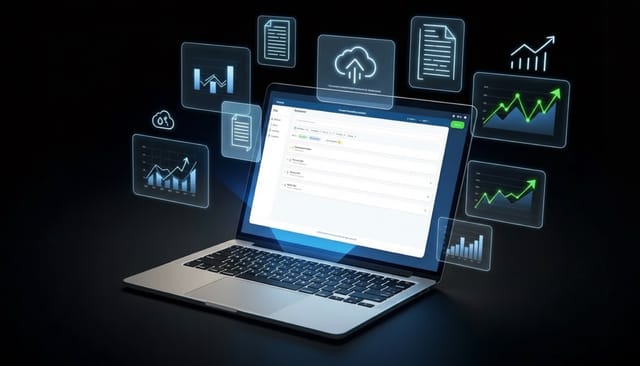
Once the data has been collected and cached, a legally compliant calculation of CO2 emissions must be performed using equivalence values, such as those published in the UN's IPCC Second Assessment Report. Since this is a recurring process, it is advisable to use a tool-based solution that automatically calculates the result from the stored data.
Ultimately, the tool should use a legally compliant template to automatically create a draft of a CO2 report, which can then be refined for communication purposes with relevant consultants, such as those from the DNK, or the Corporate Communications department.