Predictive Maintenance - Benefits and Application Examples
Predictive maintenance reimagined: How Predictive Maintenance with IoT, AI, and Big Data makes companies more efficient and sustainable.

For Busy Readers
- Strategic Competitive Advantage: Learn how Predictive Maintenance helps companies work more efficiently through proactive maintenance processes and focus even more on customer value.
- Process Optimization through Data: How sensor technology, cloud computing, and Big Data analytics make maintenance more precise and resource-efficient.
- Flexibility Instead of Rigid Schedules: Why demand-oriented maintenance is the solution to unplanned downtime.
- Industry-wide Applications: Practical examples from the energy, automotive, and manufacturing sectors demonstrate the versatility of PdM.
In most cases, maintenance and repair work are carried out according to fixed time- and interval-based schedules. This approach usually leads to unavoidable downtime, as interventions are required to repair machines or plant components. This has an impact on both operational areas and resulting maintenance costs. To avoid such undesirable side effects, proactive maintenance, also known as Predictive Maintenance (PdM), offers a promising strategic shift with great potential.
Combined with modern technologies, Predictive Maintenance enables companies to identify potential failures in their machines and systems early on and to plan maintenance measures in a targeted, demand-oriented manner.
Fundamentals of Predictive Maintenance
The goal of PdM is to predict the optimal time for maintenance work before a defect or failure occurs. This requires a solid technical infrastructure. Unlike reactive maintenance, where repairs are only performed after a failure, Predictive Maintenance is based on the analysis of operational data. Using algorithms, it monitors the actual condition of machines instead of relying on fixed schedules.
Historical Background
Predictive Maintenance has its origins in the Industrial Revolution, when the focus was initially on reactive maintenance strategies. With the increasing complexity of machinery and the high costs caused by downtime, proactive maintenance became more important. In the 1980s, the concept of "Condition Based Maintenance" (CBM) was established, which used usage data to plan maintenance measures.
The breakthrough came with modern technologies such as sensor technology and the Internet of Things (IoT) in the 2000s, which allow for continuous monitoring and analysis of machine conditions. Today, Predictive Maintenance is supported by machine learning and Big Data analytics, helping companies optimize maintenance processes to a minimum while simultaneously reducing costs.
Key Components and Technologies
As a form of proactive maintenance, Predictive Maintenance relies on innovative key technologies that are revolutionizing the maintenance of machines and systems. At the core is the continuous collection and evaluation of machine data via IoT sensors, which monitor important operating parameters in real-time. With the help of advanced analytical tools such as Artificial Intelligence (AI) and machine learning, potential failures can be identified early. Additionally, digital twins—virtual replicas of physical assets—enable precise simulations and predictions of machine behavior. Cloud computing and Big Data analytics create the foundation for processing large volumes of data, allowing companies to make their maintenance processes more efficient and reliable.
Sensors and IoT Devices
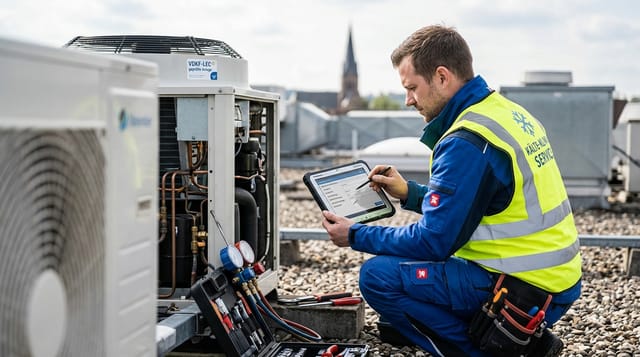
Sensors are the heart of Predictive Maintenance. The maintenance of machines and systems is based on sensor data combined with real-time analysis technology. They continuously measure values such as temperature, vibration, or pressure, providing valuable machine data regarding the operating state of the equipment. Connected IoT devices make it possible to capture this sensor data in real-time and provide it to a system in the cloud.
Data Analysis and Big Data
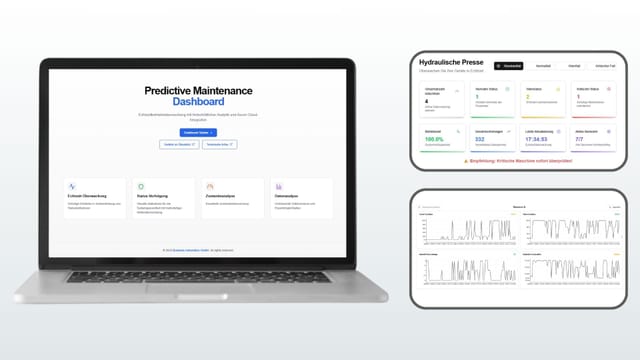
The collected data is processed using advanced analytical tools. By evaluating process and machine data, large volumes of information can be analyzed efficiently. This data makes it possible to create a reliable foundation for forecasts.
Condition Monitoring and Machine Learning
Condition monitoring, together with machine learning, plays a crucial role in predicting failures. By training algorithms with the collected data, they learn to recognize patterns and identify failures early using Predictive Maintenance. This is particularly interesting for the manufacturing industry, which frequently uses the same type of machinery.
How PdM Works
Predictive Maintenance (PdM) uses state-of-the-art technology to optimize machine performance and maintenance needs. The process begins with data acquisition, where sensors and operational data are collected directly from the machines. This is followed by data transmission and storage, often in the cloud via IoT hubs, where the information is stored securely and efficiently.
In the data processing phase, raw data is cleaned and filtered to ensure high data quality. Then, analysis and modeling come into play: here, algorithms and machine learning methods identify patterns and trends of interest for prediction. These forecasts provide valuable insights into the future behavior of machines and potential failures.
Based on these predictions, preventive maintenance measures are planned and implemented, minimizing expensive downtime. Finally, a feedback loop ensures that real-time data continuously flows back into the models to constantly improve their precision and efficiency.
Industry-Specific Application Examples
There are countless industry-specific application examples for the use of PdM that deliver remarkable results in various sectors.
PdM in the Energy Sector
Downtime for wind turbines can be almost completely avoided. Sensors continuously monitor operating parameters such as vibration, temperature, and the performance of system components. If the data detects anomalies, maintenance measures can be scheduled in time before a critical failure occurs. With modern smart monitoring technologies, the maintenance effort for individual wind turbines can be significantly reduced.
PdM in the Automotive Industry
By using modern sensor technology that continuously records parameters such as pressure, temperature, and mixture ratios in vehicle engines and chassis, the condition of central components like the engine, suspension, and brakes is reliably monitored. This makes it possible to effectively avoid expensive repairs and unexpected failures.
PdM in the Manufacturing Industry
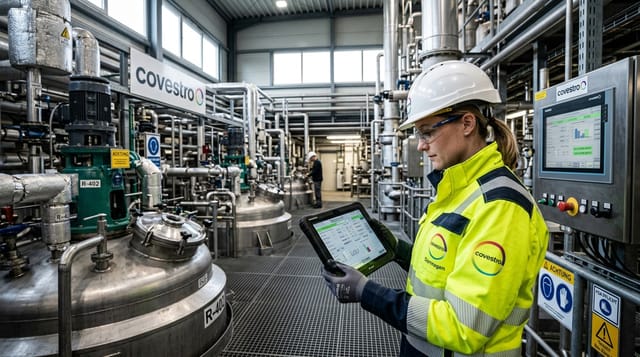
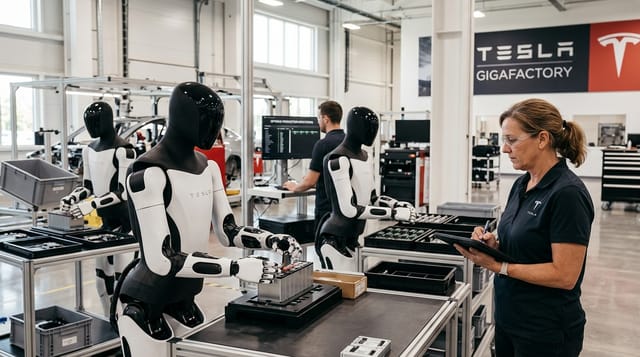
In the manufacturing industry, Predictive Maintenance enables the early detection of wear and potential defects in machines, production lines, or pumps. Sensors continuously record data such as vibrations, temperature, and operating hours to identify anomalies. In this way, unplanned downtime can be avoided and maintenance work can be planned efficiently. This not only improves productivity but also significantly lowers operating costs.
Challenges in Implementation
When introducing Predictive Maintenance, there are several challenges that can, however, be successfully overcome with the right planning and support. The first task is to understand the end-to-end process in detail and identify technical pitfalls. Then, the predictive model must be developed based on independent and dependent variables, and meaning must be assigned to the data (labeling). An important task is to integrate the new systems seamlessly into existing processes. Here, the help of experts can ensure that the transition phase runs smoothly. Data quality is also crucial, which is why it is important to choose reliable data sources and suitable sensors. Creating a suitable infrastructure for data collection and processing requires investment, but offers long-term savings through reduced downtime and optimized maintenance schedules.
Tips for Successful Adoption
For a successful start with Predictive Maintenance, companies should consider the following strategies:
- Pilot Projects: Start with small test runs and a few sensors to gain experience with the overall process.
- Employee Training: Qualify your employees to handle new technologies—from machine delivery to after-sales.
- Data Analysis: Rely on advanced analytical tools to gain valuable insights and make them available to your customers in a suitable form.
Conclusion
Predictive Maintenance is revolutionizing the maintenance of machines and systems by enabling condition-based maintenance planning through the use of modern technologies such as sensors, IoT, and machine learning. Companies benefit from reduced downtime, lower costs, and an extended service life for their assets. With applications in industries such as energy, automotive, and agriculture, PdM shows its great potential for optimizing processes and resource usage. Despite implementation challenges, careful planning, supported by pilot projects and employee training, provides a promising foundation for the successful use of this innovative strategy.
Frequently Asked Questions
Can Predictive Maintenance solutions be implemented in small companies?
Yes, proactive maintenance solutions can also be implemented in small companies, especially by using cloud-based IoT platforms that offer cost-effective monitoring and analysis solutions. This allows smaller companies to benefit from the advantages of proactive maintenance as well.
What is Predictive Maintenance and how does it work?
Predictive Maintenance is a proactive maintenance strategy that uses process and machine data to monitor the condition of assets and avoid unplanned failures. Sensors collect relevant data, which is analyzed to predict the optimal maintenance time.
What advantages does Predictive Maintenance offer over traditional maintenance?
Predictive Maintenance prevents unplanned failures and reduces downtime (e.g., of wind turbines) almost completely. This increases productivity and allows expensive repairs or failures to be avoided early on. Furthermore, inspection and maintenance can be planned more precisely, which saves costs and increases efficiency.
What are the prerequisites for Predictive Maintenance?
An essential prerequisite for Predictive Maintenance is the presence of IoT-enabled devices and sensors that allow for continuous measurement and analysis of machine data. In addition to that, a robust data analysis platform is required to evaluate the collected data and make predictions.
How does Predictive Maintenance help extend the service life of machines?
Predictive Maintenance enables targeted inspection and maintenance, so that components are only serviced or replaced when it is actually necessary. This extends the service life of the machines, as unnecessary stress is avoided and the machines are always kept in optimal condition.
What role does the Internet of Things play in Predictive Maintenance solutions?
The Internet of Things (IoT) plays a central role in Predictive Maintenance solutions, as it enables the networking of devices and the continuous collection of machine data. IoT sensors provide the real-time data required for predicting and planning maintenance measures.