
For busy readers:
- A chatbot is a software application that conducts human-like conversations with users and can be integrated into corporate websites or social media platforms to communicate via text or voice.
- There are different types of chatbots, including rule-based and AI-powered variants. Rule-based chatbots use predefined rules and decision trees, while AI chatbots leverage machine learning and artificial intelligence to conduct more natural conversations and continuously improve.
- Rule-based chatbots are suitable for clear and less complex requirements, such as customer service, while AI chatbots have access to company data and can handle complex tasks like credit card applications or invoice content to provide personalized support.
Meaning: What is a chatbot?
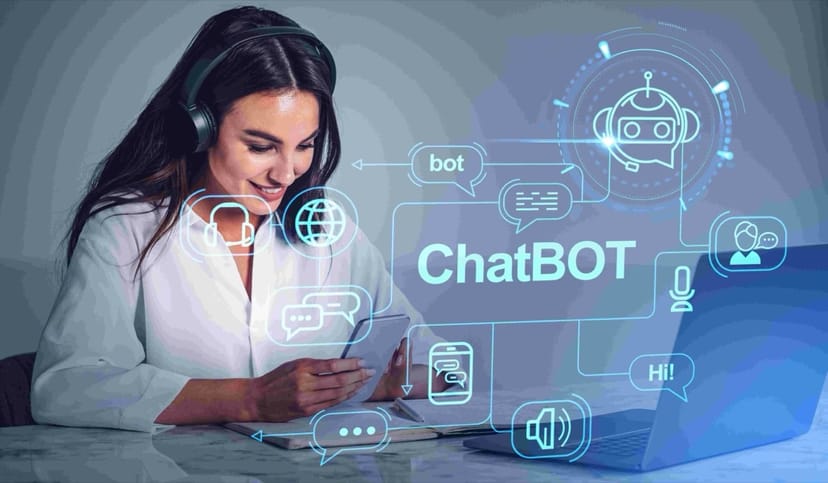
A chatbot is a software application designed to conduct human-like conversations with users. These programs are integrated into corporate websites or social media platforms, among other places, to communicate with users via text or voice. Thanks to advances in artificial intelligence (AI), chatbots have evolved considerably. While initially they could only answer simple questions, a bot today is capable of processing requests, providing information, and even completing complex tasks -- all within a chat interface connected to enterprise data.
The purpose of a chatbot is therefore to facilitate communication between humans and machines by understanding human language and responding to questions accordingly. An example of one of the first chatbots is Eliza, which was developed in the 1960s and is considered one of the earliest dialogue systems.
Anyone who has interacted with digital assistants more frequently will certainly have noticed that the quality of responses can vary greatly. There are different types of chatbots: Some respond extremely precisely and are hardly distinguishable from a human counterpart, while others fail to answer the questions asked or merely refer to general information.
What types of chatbots are there?
There are different types of chatbots, including rule-based (programmed) chatbots and AI-powered chatbots. Both types can be used in various application areas, with the goal of improving the interaction between humans and machines and providing automation solutions. A decision in favor of one of the two variants should be based on a thorough assessment of specific user needs. Further information on the development of chatbots and practical examples can be found in this blog article.
Rule-based chatbot
Rule-based chatbots, also known as click bots or button-based chatbots, are chatbots that operate on predefined rules and decision trees. They typically work by providing a limited selection of pre-made responses or actions from which users can choose. These responses or actions are often triggered by clicking on predefined buttons or options.
Rule-based chatbots show their strengths in environments with clear and low-complexity requirements. They are often used in customer service to quickly and reliably answer basic questions about opening hours or location information.
AI chatbot
An AI chatbot, also known as an artificial intelligence chatbot, is a chatbot that uses machine learning and artificial intelligence (AI) to enable human-like interactions with users.
Unlike rule-based chatbots, which are based on predefined decision trees, AI chatbots can understand natural language, generate context-based responses, and improve over time by learning from accumulated experiences. As a form of AI agents, they represent the future of chatbots.
How does a rule-based chatbot work?
A rule-based chatbot works through predefined rules and patterns. These chatbots typically use if-then-else statements to respond to user inputs. The rules are set by the developer and cover typical user queries and responses. When a user makes an input, the chatbot checks this input against the predefined rules and responds accordingly. This type of chatbot is suitable for performing simple tasks and providing standardized answers, but they are generally not very flexible or adaptable.
Practical example
A possible use case for a rule-based chatbot would be, for example, an automated booking system for hotels. The chatbot responds to predefined requests such as availability checks, reservation requests, and questions about offered services. By providing pre-set answers, the bot guides the user through the booking process.
How does an AI chatbot work?
The functionality of an AI chatbot is based on various technologies, including Natural Language Processing (NLP) and artificial intelligence (AI). Through machine learning and NLP, the bot can interact with users and learn from previous interactions, continuously evolving and improving. AI chatbots analyze user inputs, capture context, and deliver answers based on a trained model. They are capable of conducting more natural conversations and better adapting to different user requirements. Furthermore, they enable the processing of complex queries that go beyond simple rule-based systems by applying advanced algorithms. Through interaction and the resulting customer feedback, the chatbot can continuously optimize its capabilities and provide personalized responses.
Modern AI chatbots today have access to the company data relevant to their task, for example through technologies like RAG and vector databases. This enables them to perform tasks that were previously reserved for employees in, for example, customer service or the IT help desk.
Practical example
An example of using an AI chatbot is a virtual assistant for banks that understands natural language, handles complex requests such as balance inquiries, transfers, and credit card applications, and delivers context-based responses by using machine learning and Natural Language Processing to improve user interactions and offer personalized support.
Another example is an AI chatbot that provides a customer with the relevant invoices in response to a question about specific invoice content -- a scenario that also plays a central role in process automation -- and in a further step immediately takes and executes verbally formulated orders. The customer interacts with the company via voice. Filling out search and order forms becomes a thing of the past.
With Voiceflow, you can develop chatbot frontends that help you design customer-centric interactions. From simple all-in-one chatbots to complex systems that access enterprise data, Voiceflow offers a user-friendly platform for creating and refining your chatbot strategy.